How to Choose an Orthodox Cross: A Priest’s Guide
For many, the act of choosing a cross is seen as a simple purchase, like selecting a piece of jewelry. But I believe it is a profound spiritual act, a visible testament to our faith and a personal vow to follow Christ. It’s an intimate decision, a journey to find a sacred object that will serve as a constant reminder of our redemption.
In this guide, I will share with you the pastoral wisdom I have gathered over many years. We will explore the deep meaning behind the Orthodox cross, consider the practicalities of choosing one, and I will offer some specific recommendations to help you find the perfect cross that resonates with your heart.
The Symbolism and Meaning
When you look at an Orthodox cross, you are not simply seeing a shape. You are beholding a universe of theological depth and history. Each element is rich with meaning, an unspoken language of faith.
- The Eight-Pointed Form: The most distinctive feature of the Orthodox cross is its eight-pointed shape. I often explain it this way: the topmost, shorter bar represents the inscription placed above Christ’s head by Pilate. The longest, central bar is for His outstretched arms. The lowest, slanted bar is for His footrest. This unique slant is a beautiful piece of symbolism—it points upward to the repentant thief who was promised paradise, and downward to the unrepentant one who chose condemnation. It serves as a visual reminder of the free will we all possess.
- IC XC NIKA: These Greek letters, often found on the cross, are not just a decoration. They are a powerful proclamation. “IC XC” stands for Iesous Christos (Jesus Christ), and “NIKA” means “conquers.” Together, they declare the ultimate truth of our faith: Jesus Christ Conquers! His death on the cross was not a defeat, but a triumphant victory over sin and death.
- The Crucifixion (The Corpus): This is perhaps the most significant difference between Orthodox and Catholic crosses. In the Orthodox tradition, the figure of Christ is not depicted in agony. He is serene, His body often appears upright or even regal, sometimes with a gentle fold in the cloth around His waist. This is not a failure to show His suffering, but a profound theological statement. He is depicted as the triumphant King of Glory, who, even in death, has conquered death itself.
- The Skull of Adam: At the very base of the cross, you will often find a skull. This is the head of Adam, the first man. The cross was erected on the hill of Golgotha, which means “the place of the skull.” By depicting Adam’s skull at the foot of the cross, we are shown that Christ, the New Adam, poured His redeeming blood over the sin of the Old Adam, cleansing all of humanity from the ancestral fall.
- Orthodox vs. Catholic Crosses: This is a question I hear quite often. The primary difference is the depiction of Christ. As mentioned, the Orthodox Christ is victorious and serene, while the Catholic portrayal emphasizes His physical suffering and anguish. A more subtle difference is the shape of the cross itself—the eight-pointed Orthodox form versus the four-pointed Latin cross.
Practical Considerations
The spiritual meaning of the cross is paramount, but the physical object itself should be chosen with care. A cross is meant to be a constant companion, not a burden.
- For Whom Is the Cross?
- For a Baptism: For an infant’s baptism, I always recommend a small, lightweight cross with rounded edges. It should be comfortable and safe for the child to wear at all times, without causing any irritation.
- For a Man: I have found that a man’s cross is often more substantial in size and has a classic, minimalist design. It serves as a steadfast emblem of strength and commitment.
- For a Woman: For women, a more delicate or ornate cross can be a wonderful choice. Designs with graceful filigree or subtle embellishments can speak to the beauty and quiet strength of her faith.
- Material:
- Gold: Gold is a timeless material, valued for its beauty and durability. Spiritually, it symbolizes divine light and purity. A gold cross is an enduring heirloom, a precious object passed down through generations.
- Silver: Silver has a beautiful, understated elegance. It is more affordable than gold and easy to care for. In our tradition, silver is often associated with purity and humility. A silver cross is a classic and reverent choice.
- Wood: A wooden cross, to me, has a profound spiritual resonance. It is the humblest of materials, connecting us directly to the simple wood of the Cross itself. It is a symbol of self-denial and a quiet, profound faith. A wooden cross is a powerful and personal statement.
- Size and Style: The most important rule here is comfort. The cross you choose should feel natural to wear, neither too heavy nor too small to be noticeable. It should be a constant presence, not a distraction. When you choose, listen to your heart—the right cross will simply feel right in your hands.
A Priest’s Recommendations
Based on my experience and what I’ve seen others cherish, I have selected a few examples that beautifully embody the spiritual and practical qualities we’ve discussed.
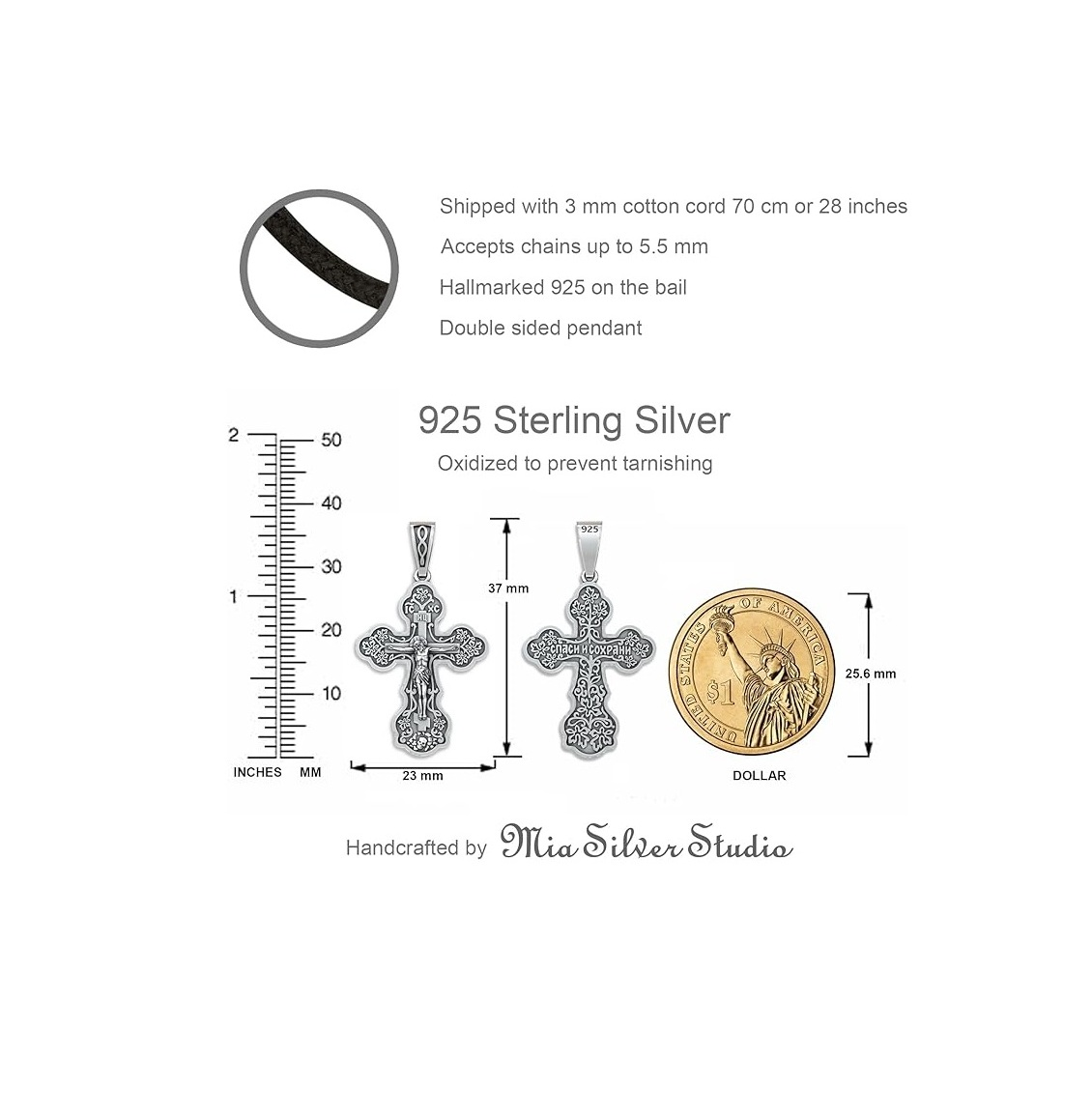
1. A Classic Silver Cross for a Man
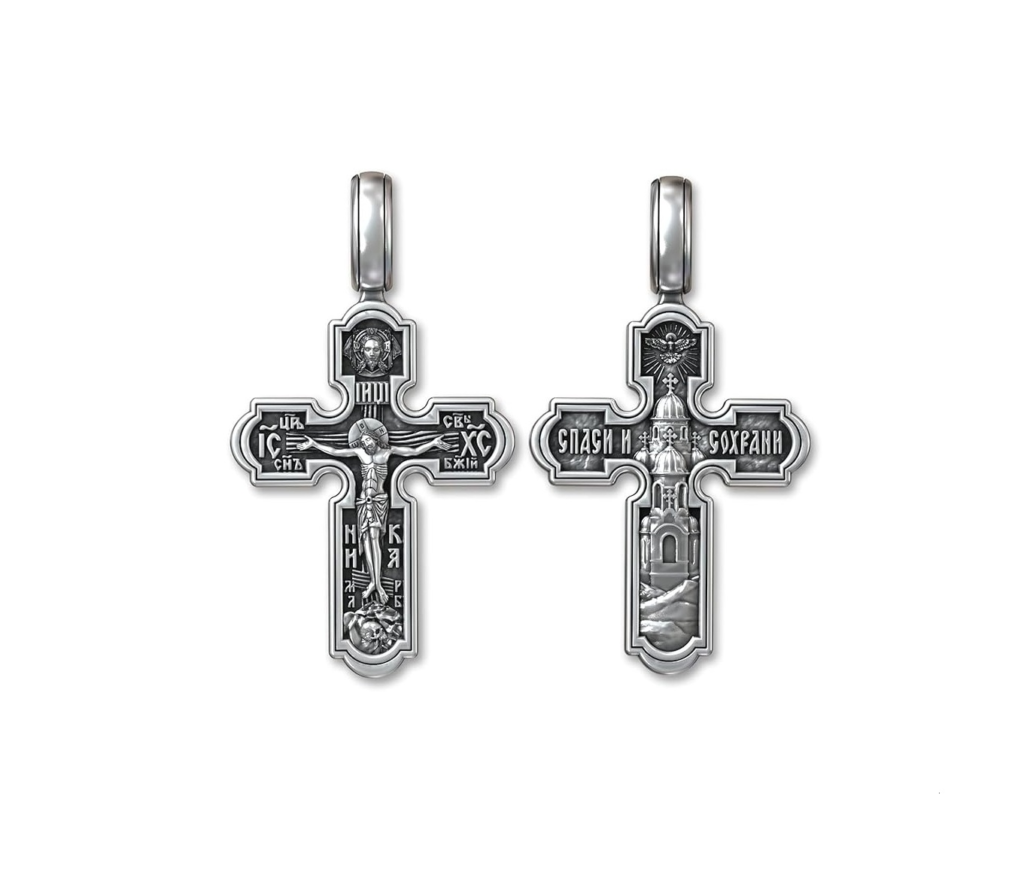
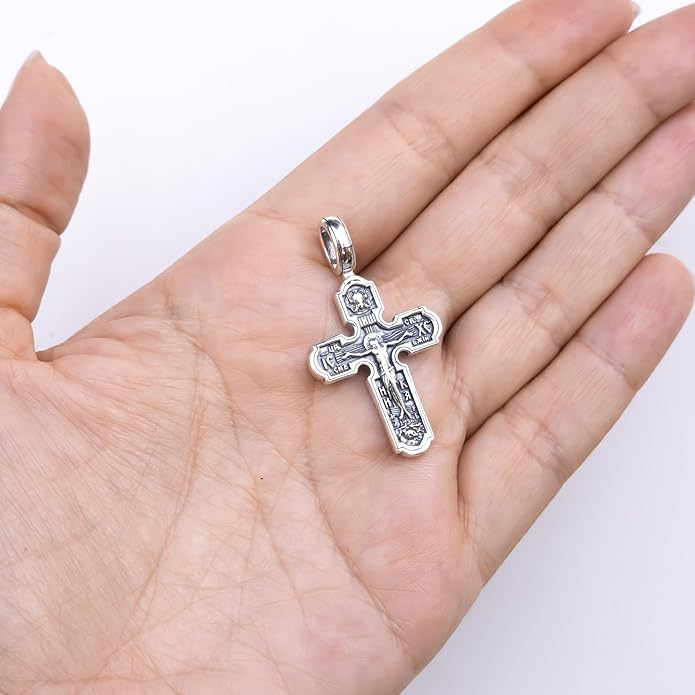
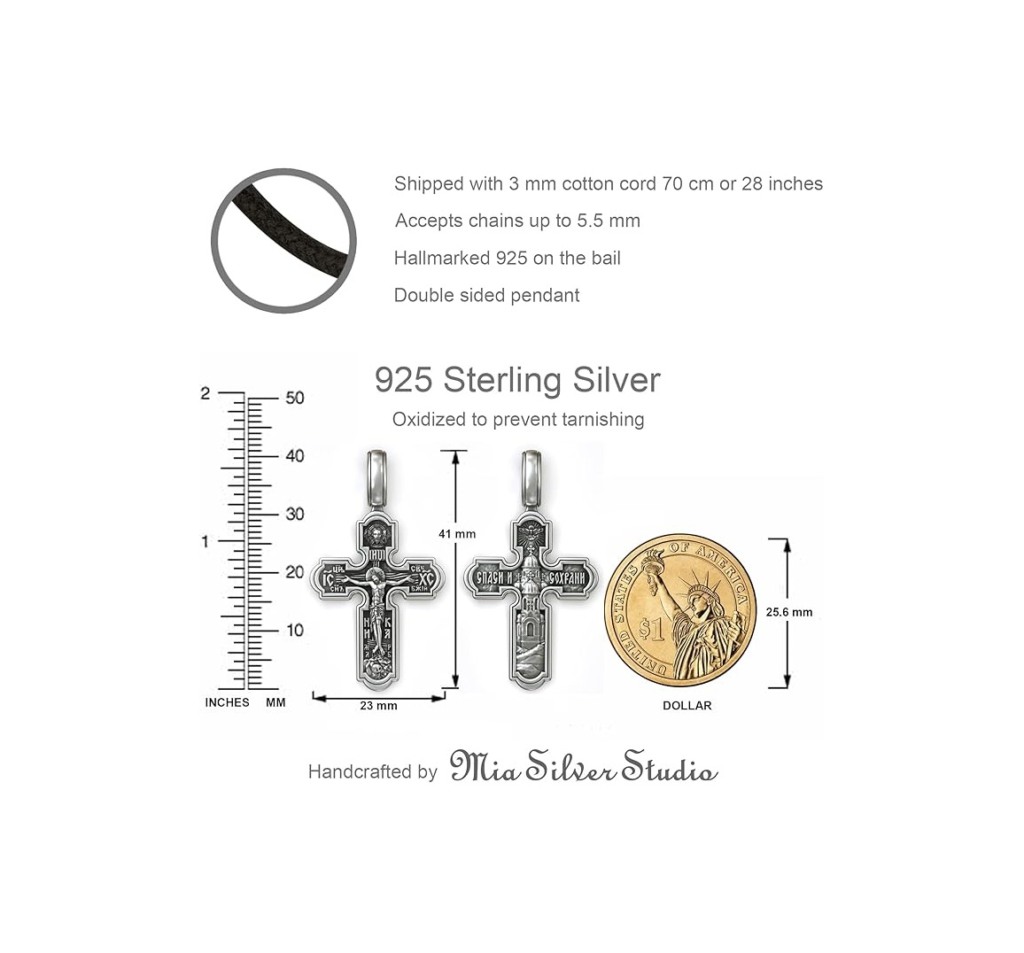
This piece is a perfect example of canonical design executed with subtle elegance. Its solid sterling silver composition and clean lines make it a powerful yet understated symbol of faith, durable enough for daily wear. It’s a cross I would happily wear and recommend to any man seeking a dignified and timeless representation of his beliefs.
Shop a classic men’s Orthodox cross on Amazon here
2. An Elegant Gold Cross for a Woman
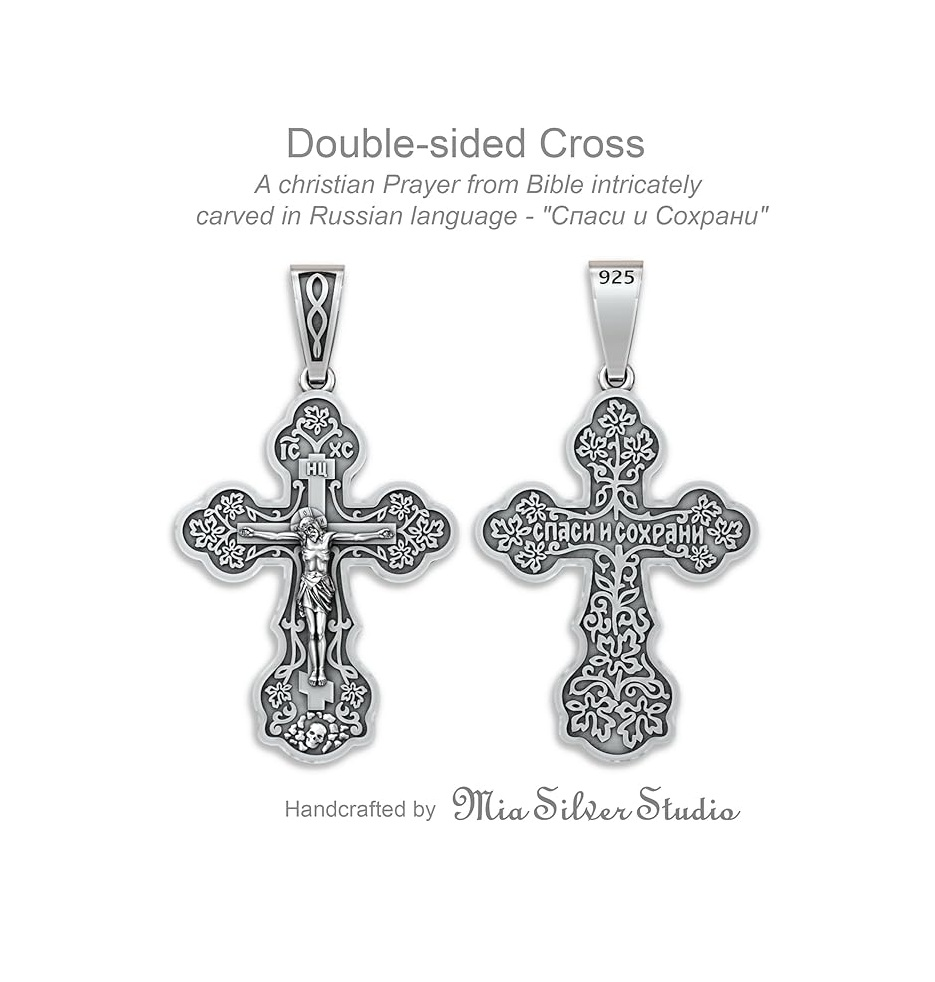
This gold cross is a beautiful expression of faith through art. The intricate filigree work gives it a delicate, almost ethereal quality, making it a wonderful piece of jewelry as well as a sacred object. It feels both modern and timeless, a perfect heirloom to be passed down through generations.
Shop a graceful women’s Orthodox cross here

3. A Safe Baptismal Cross for an Infant
When I bless a cross for a newborn, I always hope the family has chosen something safe and simple. This small, lightweight sterling silver cross with its smooth, rounded edges is ideal. It is a humble, yet precious, symbol of the child’s first step in faith, something they can wear comfortably from day one.
Shop a small and safe infant’s cross on Amazon here

Conclusion
You have found a beautiful cross online, but a crucial pastoral tip: it is not yet a sacred object. Before you wear it, it must be blessed by a priest. The act of blessing infuses the cross with spiritual power, making it a sacred sacramental. Bring it to your local Orthodox church and ask the priest to bless it for you. This simple act will transform your purchase into a tool of grace.
Ultimately, the material of the cross is of little consequence. Whether it is a simple piece of wood or a brilliant gold pendant, what matters most is the faith with which you wear it. A simple wooden cross worn with profound faith is infinitely more valuable than a diamond-encrusted one worn merely as an accessory. May your cross be a constant reminder of Christ’s love and a source of strength on your spiritual journey.
On the Tarnishing and Wear of Silver Items
The tarnishing of silver or the breaking of a chain is typically not a manufacturing defect, but rather the result of natural physical and chemical processes. There is no need to view these events as bad omens or to search for mystical reasons.
Natural Causes, Not Mysticism
Silver is a reactive metal, and its darkening is a chemical reaction, mainly with the sulfur found in our perspiration, cosmetics, and even the air itself. The intensity of this reaction varies from person to person and can change with one’s health or the humidity of the environment. Just as iron rusts, silver tarnishes—it is a property of the material, not a spiritual sign.
Similarly, a chain is made of many small links that simply wear down from constant use and friction, much like any piece of clothing or a pair of shoes. This is a matter of time and mechanical wear.
Therefore, if a cross has tarnished, it simply needs to be cleaned. If a chain has broken, it should be taken for repair. It is far more important to be concerned with the purity of your soul and the strength of your faith than with the condition of the metal. Let these minor, everyday incidents be a reminder not for superstitious fear, but for prayer and for turning to God more often.